

The Essential Necessity Of Sleep.
Sleep isn’t a pause button. It’s the repair shop.
Our culture treats sleep like an optional add-on, something you “earn” after you’ve done enough for the day. But physiologically, sleep is when your body does some of its most important work: restoring tissues, balancing hormones, consolidating memory, and stabilizing mood.

A Roar From The King!
Psalm 127:2 “It is in vain that you rise up early and go late to rest, eating the bread of anxious toil; for he gives to his beloved sleep.”
God is a God of order. His entire creation is carefully crafted and connected.
We were designed for natural rhythms in rest, recovery, and relationship. He gives to His beloved sleep. Not exhausted, collapse, or drug-induced sedation, but natural sleep.
A merciful necessity. A purposeful pause. A gift of grace. A nightly reminder that we are not God, and we are not sovereign. We do not hold the universe together. Earth is not sustained by our striving.
The world continues to spin while you are unconscious and asleep. This truth is universally humbling if we allow it to be. Consider that sleep is a physiologic constant. Sleep is an absolute necessity for every human being over all of time, regardless of position, power, or place.
The Mane Thing!
Revealing Why Sleep Is Sacred
Here are 8 reasons why sleep is sacred and how to respond with practical, actionable steps.
1) Sleep is active repair, not “wasted downtime.”
During sleep, your body shifts into restoration mode: cellular cleanup, tissue repair, and recovery from the day’s wear and tear. Think of it as overnight maintenance that keeps the whole system from running hot and breaking down.
Practical take: If you want better energy, don’t start with “more hustle.” Start with more repair time.
2) Sleep protects your brain’s “save” button.
Sleep helps consolidate learning and memory. It’s one reason you can read something at night and understand it better the next day, your brain filed it appropriately, where it belongs.
Practical take: When you’re foggy, forgetful, or scattered, the issue may not be a lack of motivation; it may be a lack of restoration.
3) Sleep stabilizes mood and emotional regulation.
When sleep is short or fragmented, emotional reactivity tends to rise. Small stressors feel bigger. Patience shortens along with your fuse. Anxiety and low mood may feel closer to the surface and easily triggered.
Practical take: If your fuse is short lately, don’t just “try harder.” Consider the simplest lever: protect your sleep time.
4) Sleep supports metabolism, appetite, and weight stability.
Sleep loss often shifts hunger signals and cravings in an unhelpful direction. Many people notice more snacking, more sugar consumption, and less “I’m satisfied” signaling when they’re tired.
Practical take: If you’re working to reduce your weight or blood sugar, sleep is not optional; it’s foundational.
5) Sleep helps balance immunity and inflammation.
Sleep is closely tied to immune function and inflammatory balance. When sleep is chronically deficient, the body tends to drift toward a more inflamed, “on-alert” state.
Practical take: If you feel run-down or achy, or if you’re always “fighting something,” don’t skip the basics: consistent sleep supports overall resilience.
6) Sleep cycles are God's design; non-REM and REM both matter.
Sleep isn’t one flat state. It moves through cycles that include non-REM (more physical repair and restoration) and REM (more cognitive/emotional processing). Good sleep isn’t just more hours; it’s a better rhythm and restorative depth.
Practical take: You don’t just want “time in bed.” You want quality cycles, protected by consistent timing.
7) Sleep debt is real, and it’s sneaky.
Sleep debt accumulates quietly. Many people adapt to chronic tiredness and call it “normal, the way it is in our modern world.” But cumulative sleep debt can impair attention, decision-making, and emotional stability, even if you choose to push through.
Common myths, proven false:
“I need less than 7 hours of sleep a night.” (5% of all people)
“I’ll catch up on weekends.” (doesn’t fully restore a chronic deficit.)
“Alcohol helps me sleep.” (It may sedate, but it disrupts sleep architecture and depth.)
Practical take: Don’t aim for perfect. Aim for a steady trend, move toward more consistent, restorative sleep.
8) Sleep is sacred because it trains surrender and stewardship under God’s sovereignty.
Sleep is a nightly act of humility: you stop, you release control, and you let your body, mind, and soul be restored. Scripture even frames sleep as a gift: “for he gives to his beloved sleep” (Psalm 127:2, ESV).
Practical take: Treat sleep like a sanctuary, not a speed bump. It is not an annoyance that just slows you down.
A simple sleep reset you can begin tonight:
Set a consistent wind-down time (same 30-minute routine before bed each night).
Dim the lights and reduce screen time (no blue light as bedtime approaches).
Cool, dark, quiet bedroom (your nervous system loves predictability).
Same wake time most days (rhythm builds better sleep anticipation).
Educational note: This article is for general education and does not provide personal medical advice. If you have persistent insomnia, loud snoring, apnea, severe daytime sleepiness, or mood symptoms, please discuss with your clinical professional.
Podcast For Aslan’s Pride
Click here to listen to The Aslan Health Podcast
Questions From Cubs
J. C. asks, “I know sleep matters, but how do I know whether my poor sleep is really affecting my health or if I’m just tired because life is busy?”
Poor sleep affects far more than your energy level. When sleep is consistently short, fragmented, or poor in quality, it can impair concentration, mood, stress tolerance, blood sugar regulation, appetite control, immune resilience, and cardiovascular health. Many people assume they are simply “pushing through a busy season,” when in reality, their body is running with too little margin for meaningful recovery. If you find yourself waking unrefreshed, relying heavily on caffeine, feeling more irritable or anxious, struggling with cravings, or dragging through the day, inadequate sleep may be costing you more than you realize. Sleep is not a luxury. It is one of the body’s most essential forms of restoration.
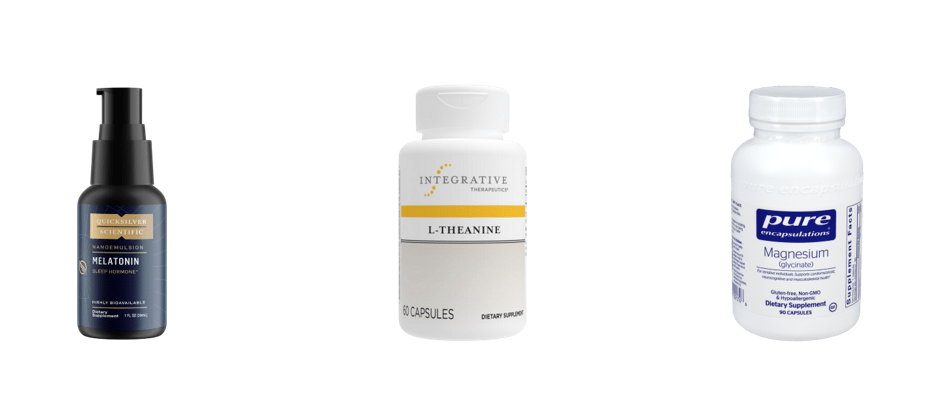
If you are interested in basic supplementation, here are my best product recommendations.
Low-dose melatonin can be useful because it acts more like a timing signal than a sedative, but timing matters greatly, and more is not always better.
Magnesium glycinate may support relaxation in the evening.
L-theanine can be helpful for some people who feel tired but mentally overstimulated at night.
Available at the Aslan Health Fullscript Dispensary

Remember, the most important principle is to build a solid foundation in good sleep hygiene first. Consistent wake time, morning light, dim evenings, earlier meals, and a regular wind-down routine. Then use supplements carefully and wisely, ideally with professional guidance if you have medical conditions, take medications, or have persistent sleep problems.
Aslan’s Den
Visit the Aslan Health Website — www.aslanhealth.com
Listen to The Aslan Health Podcast — Apple Podcasts, Spotify, YouTube, and other platforms.
Enroll in the Energy Restoration Roadmap Program
Your Next Step
At Aslan Health, our goal is not to overwhelm you with information.
It’s to provide clarity. To translate complex medical research and experience into practical, meaningful steps that you can apply immediately. Our mission is to help you move from confusion to confidence, from exhaustion to vitality, and from survival to purposeful living. Download the free Aslan Health Sleep Hygiene Tracker and the Circadian Rhythm Guide below to get started today!
Your Dog Deserves Real Food. Now 60% Off.

Vets say UnKibble is "the food dogs were born to eat." Made with USDA-grade meats, gently dried to lock in 99% of nutrients, no fridge needed. 87% of dogs saw health improvements after switching. Your dog deserves this: Get 60% off with code DESERVES60.
